
Girls' leadership training improves school, job prospects in Zambia
 Nation Reporter
Girls' leadership training improves school, job prospects in Zambia
Content Type: Free
By BUUMBA CHIMBULU
TRAINING girls in leadership, negotiation and critical thinking is helping more Zambian girls remain in school and improve their chances of finding employment, according to a new Mastercard Foundation report on secondary education in Africa.
The report, titled Secondary Education in Africa: Expanding Pathways to Work, Livelihoods, and Lifelong Learning, identifies Zambia and Uganda as examples where developing these skills among girls has improved school enrolment and participation in the labour market.
“In Zambia and Uganda, supporting girls’ learning in negotiation, leadership, and critical thinking improved both enrollment rates and labour-market participation,” the report stated.
Launched in Accra, Ghana, the report also highlights how education programmes can benefit communities beyond the classroom.
It cites the work of CAMFED, which supported young Zambian women who completed secondary school to receive training in climate-smart agriculture and become Agriculture Guides.
Through demonstration farms, the women shared their knowledge of water conservation and drought-resistant crops with 8, 500 other women, helping spread climate-smart farming practices within their communities.
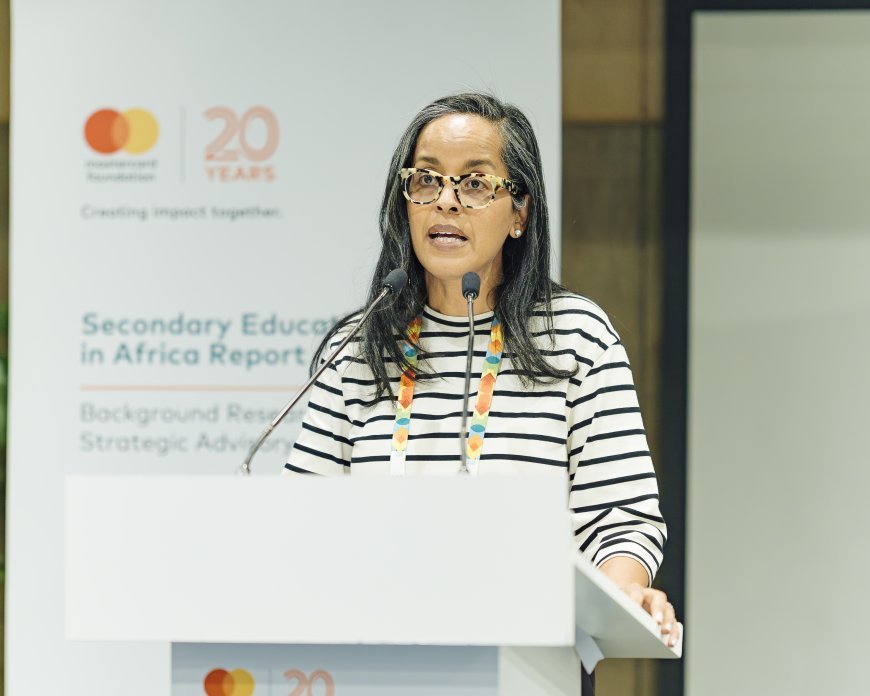
Mastercard Foundation president and chief executive officer Sewit Ahderom said secondary education was a critical opportunity to prepare young Africans for employment and productive livelihoods.
“Education for today’s young people, especially at the secondary level, must lead somewhere. For most young Africans, secondary school is the last time a system reaches them at scale,” he said.
The findings come as Zambia continues to expand access to education following the introduction of free education in 2022.
According to the Zambian government, over 2.3 million additional learners have entered the school system over the past four years, while the Education (Amendment) Act has since provided a legal basis for free education.
To accommodate the growing enrolment, Government recruited 30, 495 teachers in 2022 and has continued with further recruitment.
The report recognises fee-free education as an important step towards increasing secondary school access across Africa, noting that the gap between boys and girls completing lower secondary education has narrowed significantly.
However, it warns that access alone is not enough, as transport, uniforms, meals and learning materials remain financial barriers for some learners.
It recommends bursaries, cash transfers, school feeding programmes and increased investment in schools serving disadvantaged communities.
The report also calls for improved teacher support, particularly in rural areas, noting that sub-Saharan Africa will need an estimated 10.7 million additional secondary school teachers by 2030.