

TulimeZed turns to technology to help Zambian farmers adapt to climate change
 NationHM
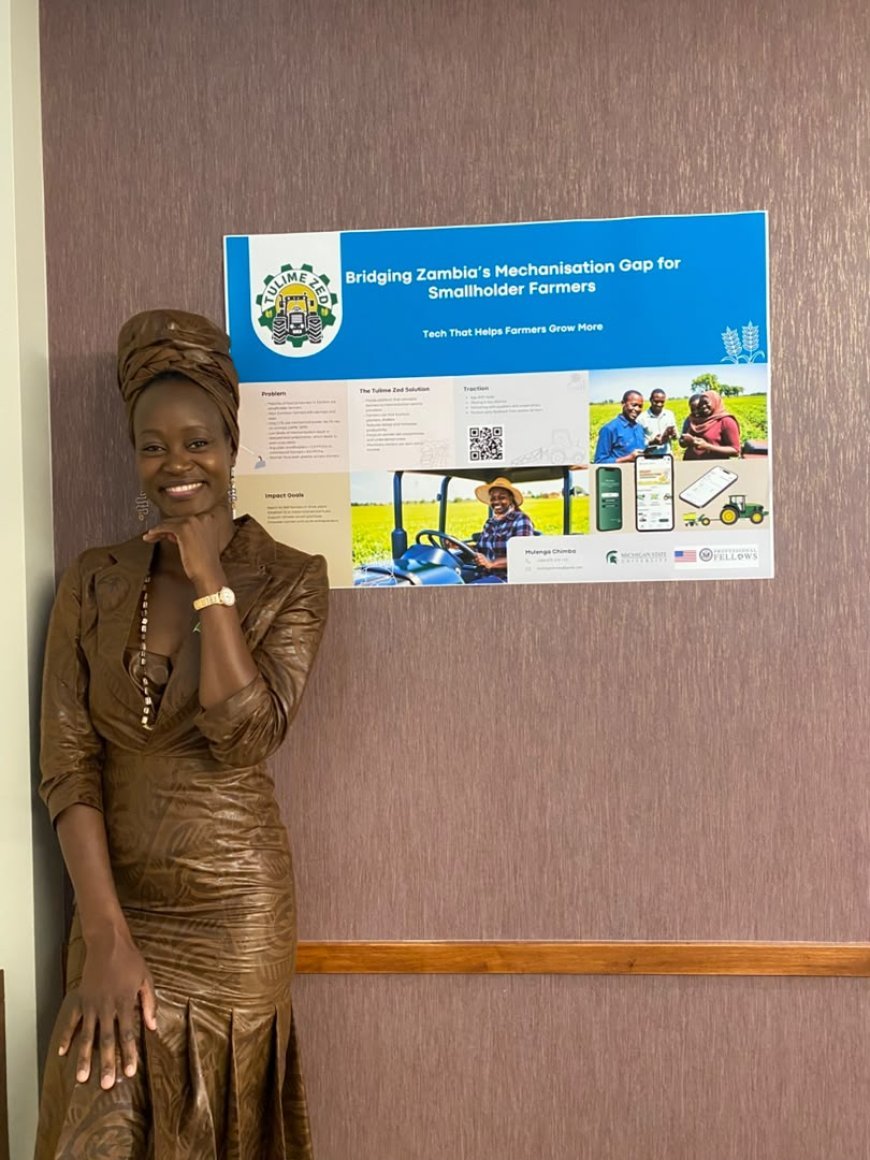
TulimeZed turns to technology to help Zambian farmers adapt to climate change
Content Type: Free
By BUUMBA CHIMBULU
AS climate change continues to expose the country’s farmers to droughts, delayed rainfall and increasingly unpredictable planting seasons, access to agricultural equipment is becoming an important part of the effort to protect food production.
For Mulenga Chimba, Director and founder of TulimeZed and a Fellow of the inaugural African Food Fellowship (AFF) Zambia Cohort, one of the challenges is ensuring that farmers can access the machinery they need when favourable conditions for farming arise.
A farmer may have land ready for planting but lack a tractor to prepare it, while a machinery owner in the same community may have equipment sitting idle because they cannot find customers.
It is this disconnect that Ms Chimba hopes to address through TulimeZed, a digital marketplace designed to connect farmers and other users with owners of agricultural machinery and equipment available for hire.
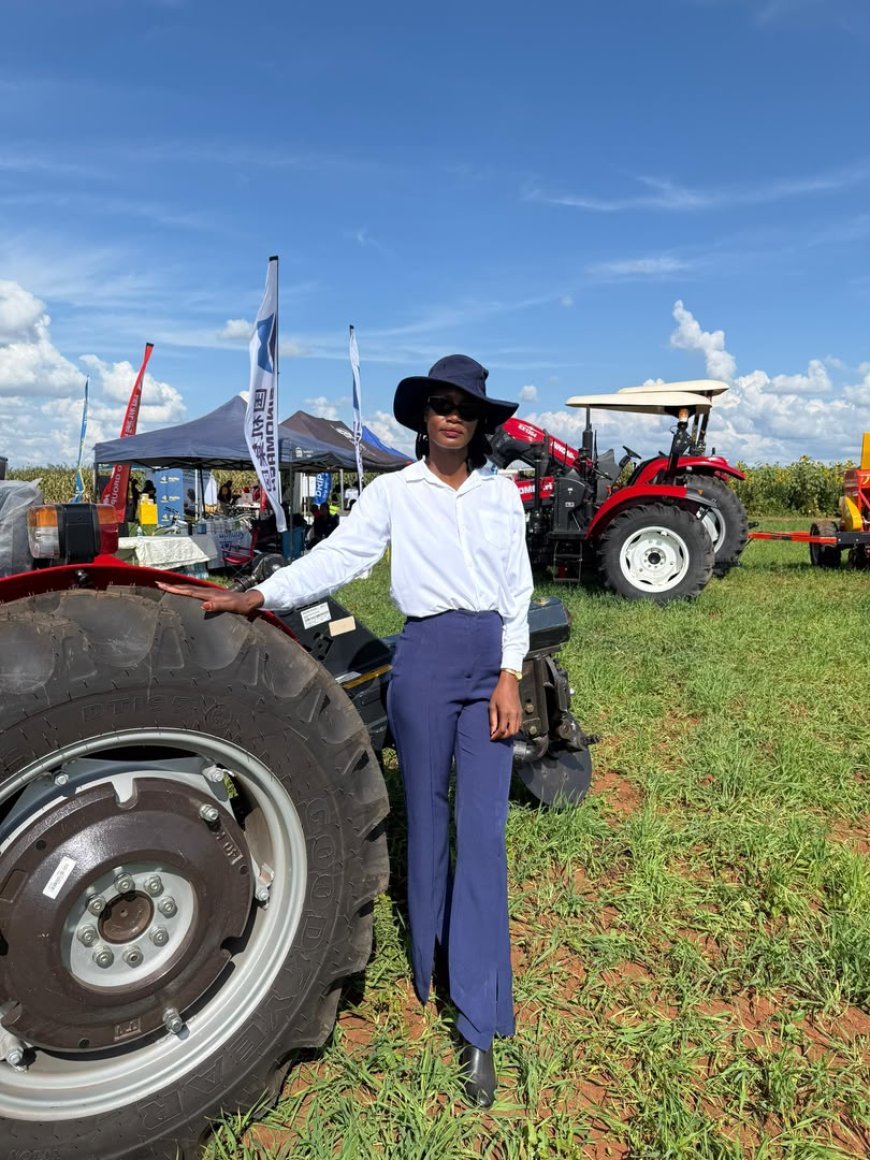
Her approach focuses on improving access to equipment without requiring small-scale farmers to make the substantial financial investment needed to buy and maintain machinery.
“Farmers should not have to own machinery to benefit from mechanisation, and machinery owners should not have to leave productive equipment idle when there is demand for its services,” she said.
The idea has particular relevance in Zambia, where the effects of climate change have highlighted the vulnerability of farming systems that depend heavily on rainfall.
The 2023/2024 drought demonstrated how prolonged dry spells can disrupt agricultural production and threaten the livelihoods of farming households.
For small-scale farmers, unpredictable rainfall can narrow the window available for land preparation and planting. Delays in accessing machinery may mean missing favourable conditions, even when farmers have the seeds and willingness to plant.
Through TulimeZed, Ms Chimba wants to make it easier for farmers to find service providers offering ploughing, ripping, harrowing and other agricultural operations.
The platform operates as a web application, with plans to develop a mobile application to improve accessibility.
Farmers can also contact the team by phone or WhatsApp for assistance in identifying suitable machinery owners.
Ms Chimba said the platform is intended to reduce farmers’ dependence on informal referrals and personal networks, which can result in long waiting times, unclear prices and difficulties finding reliable service providers.
Engagements with farmers and machinery owners, alongside user acceptance testing, have helped the business identify the need for improved coordination, transparent pricing and greater trust between equipment owners and those seeking their services.
However, TulimeZed is not a weather forecasting or agricultural advisory platform.
Its immediate focus is to help farmers access machinery, while its founder sees opportunities to build partnerships that could connect users to wider climate-related support.
“We recognise that improving food-system resilience requires looking beyond what happens on the farm,” Ms Chimba said.
She explained that climate shocks affect the entire food value chain, from production to transportation, processing, trading and consumption.
Drought-related disruptions can reduce food supplies, increase transportation costs and contribute to higher food prices.
TulimeZed therefore aims to facilitate access to equipment across different stages of agricultural production, including planting, crop management, harvesting and post-harvest operations.
Timely access to harvesting equipment, for example, could help farmers reduce delays and potential crop losses, while suitable handling and transportation equipment could improve the movement of produce from farms to markets.
The business also sees potential in supporting climate-smart agriculture, particularly practices that help farmers manage soil moisture and reduce unnecessary soil disturbance.
Ms Chimba said access to conservation agriculture equipment, including rippers and appropriate planting machinery, can help farmers implement minimum-tillage practices.
She added that TulimeZed has engaged development organisations interested in accessing ripping and other mechanisation services for farmers participating in climate-smart agriculture programmes.
Water management is another area the business hopes to explore as Zambia considers ways to reduce its vulnerability to rainfall variability.
TulimeZed is interested in developing irrigation-as-a-service models that would allow farmers to access irrigation equipment and related services without having to buy expensive infrastructure individually.
Such an approach could offer additional production options where suitable water resources and infrastructure are available.
However, Ms Chimba said this would require partnerships with irrigation specialists, financial institutions and development organisations.
The business also hopes to support crop diversification by facilitating access to machinery used in the production of legumes, horticultural crops and other agricultural enterprises, rather than focusing exclusively on maize.
For Ms Chimba, improving access to equipment is only one part of the response to climate change. Farmers also need reliable markets, financing, technical advice and information to make informed decisions about what to grow and how to manage their land.
Fellowship shapes a broader approach
Ms Chimba said her participation as a Fellow in the inaugural AFF Zambia Cohort has encouraged her to examine the country’s food-system challenges from a broader perspective.
With a background in agricultural economics and agribusiness management, she has traditionally approached challenges through the lens of improving agricultural productivity, efficiency and access to productive resources.
However, the Fellowship has helped her appreciate that many of the challenges facing the country's food system are interconnected and cannot be addressed through isolated interventions.
“Being part of the inaugural African Food Fellowship cohort in Zambia has encouraged me to look at food-system challenges from a broader perspective,” she said.
One lesson that has particularly influenced her thinking is the importance of systems thinking.
Ms Chimba said the low levels of agricultural mechanisation in the country might initially appear to be a problem that requires simply increasing the number of tractors available to farmers.
However, the challenge extends beyond equipment availability to include access to finance, fragmented demand, infrastructure, information, trust between service providers and farmers, and coordination among different actors in the agricultural sector.
These constraints can become more significant as climate change makes rainfall patterns less predictable and shortens the time farmers have to prepare their land and plant their crops.
Even where farmers receive information about favourable planting conditions or climate-smart farming practices, they may struggle to act on that advice if the necessary equipment is unavailable or unaffordable.
For Ms Chimba, this reinforces the need for solutions that bring together technology, financing, agricultural knowledge and partnerships rather than treating mechanisation as an isolated challenge.
She said the Fellowship has also challenged her to reflect on the role of leadership in influencing change, particularly the need to understand the interests of different stakeholders and identify opportunities for collective action.
“It is not enough to develop an innovation and expect it to solve a problem independently,” she said, emphasising the importance of engaging people affected by a challenge and working with those who have the resources, knowledge and influence to contribute to solutions.
This approach is informing TulimeZed's interest in working with farmer cooperatives, development partners, machinery owners, financial institutions and government agencies.
Partnerships with cooperatives and producer groups could help farmers in the same area coordinate their machinery needs, making it more viable for service providers to mobilise equipment to several farms rather than serving individual small plots.
Such collaboration could also improve access to climate-smart equipment and help farmers respond when favourable weather conditions create narrow opportunities for planting and other agricultural operations.
Using data to identify gaps
Beyond service delivery, Ms Chimba sees an opportunity for the platform to generate information that could support agricultural planning.
As more users join, records of machinery requests and equipment availability could reveal where demand is high, which services are lacking and when particular types of equipment are most needed.
For example, repeated requests for planting or harvesting equipment in a district with few available service providers could help identify gaps requiring further investment or support.
When combined with weather forecasts, crop production estimates and market information, such data could contribute to a broader understanding of agricultural risks and potential disruptions to food supplies.
Ms Chimba cautions, however, that machinery booking records alone cannot predict food shortages.
Any such assessment would require information from multiple sources.
She also stresses the need to protect farmers' and machinery owners' personal and commercially sensitive information as the platform develops.
For now, TulimeZed's priority is to strengthen its platform, improve service delivery and establish reliable operational records.
Ms Chimba admits that the business cannot prevent drought or guarantee successful harvests.
Its contribution is to reduce some of the barriers that prevent farmers from accessing equipment and services needed to respond to changing agricultural conditions.
The longer-term ambition is to make TulimeZed part of a wider network of agricultural actors working to improve productivity and resilience.
As the country confronts the effects of climate change, the ability of farmers to act quickly when rainfall conditions are favourable will remain important.
But timely access to machinery must go hand in hand with appropriate farming practices, reliable information, financing and markets.
For Ms Chimba, the challenge is to ensure that farmers are not left without practical options simply because they cannot afford to own the equipment needed to prepare their fields or manage their crops.
By connecting those who need machinery with those who have it, TulimeZed is seeking to make existing resources more accessible while exploring how technology and partnerships can support a more climate-resilient food system in the country.