


By Bernadette Deka Zulu
ZAMBIA’S pursuit of economic growth and infrastructure development has led it to embrace Public-Private Partnerships (PPPs) as a key strategy. In recent years, the Zambian government has increasingly turned to PPPs to leverage private sector resources, expertise, and efficiency in delivering public infrastructure projects.
This article delves into the vital role PPPs play in the country’s development journey, highlighting notable successes and the implications for private sector participation in public infrastructure.
The power of PPPs
Public-Private Partnerships (PPPs) are collaborative arrangements between the public and private sectors aimed at financing, designing, implementing, and operating public infrastructure projects. In Zambia, these partnerships have gained significant momentum due to their potential to bridge infrastructure gaps by mobilising private capital and technical know-how.
PPPs have emerged as a critical tool for governments worldwide to address budget constraints and deliver high-quality public services efficiently.
PPP projects driving progress
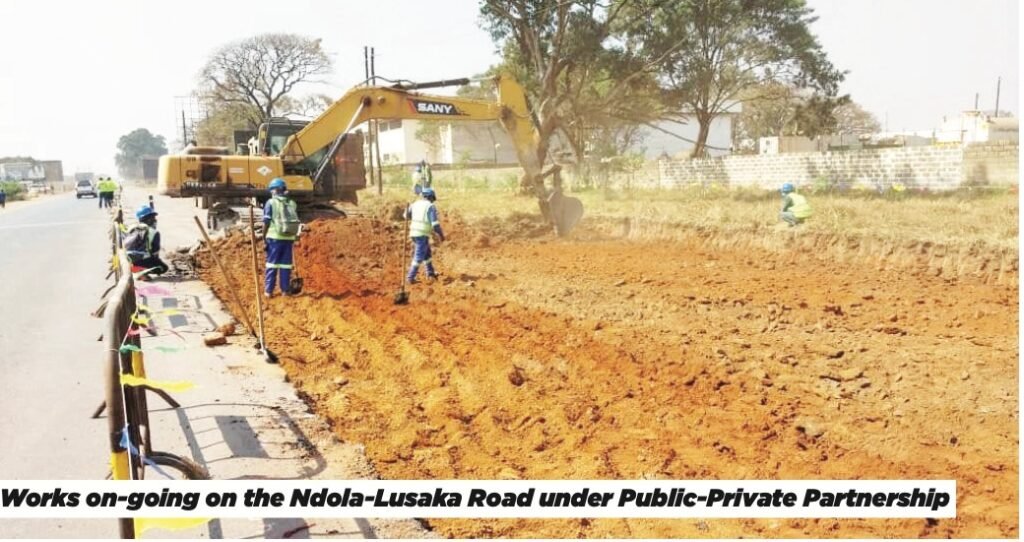
Zambia’s experience with PPPs has yielded remarkable results across various sectors. One standout achievement is the Lusaka-Ndola dual carriageway project.
This critical transportation link, constructed through a PPP, has not only enhanced connectivity between the capital city, Lusaka, and the Copperbelt region but has also substantially reduced travel times.
As a result, trade opportunities have flourished, demonstrating the transformational impact of such partnerships on national infrastructure and economic development.
Another notable example is the Kafue Gorge Lower Hydropower Plant, a significant addition to the energy sector. Developed in collaboration with the private sector, this hydropower project has bolstered the national grid’s capacity, addressed power shortages and attracted foreign investments crucial for sustained economic growth. These achievements underscore the potential for PPPs to drive progress in critical infrastructure sectors.
Boosting energy infrastructure
Zambia’s energy sector has also witnessed remarkable PPP initiatives. The Kafue Gorge Lower Hydropower Plant, developed in partnership with the private sector, has added substantial capacity to the national grid. This not only addresses power shortages but also attracts foreign investment, essential for economic growth.
Healthcare access through PPPs
In the healthcare sector, Zambia has leveraged PPPs to expand access to quality healthcare services. The University Teaching Hospital PPP project in Lusaka has upgraded facilities and improved the delivery of healthcare services, benefitting thousands of Zambians.
Implications for private sector involvement
The success of PPP projects underscores the substantial potential for heightened private sector engagement in the nation’s public infrastructure development.
These partnerships not only present an avenue for private investors to actively participate in key projects but also provide a win-win scenario for both the public and private sectors. PPPs offer an array of compelling advantages, foremost among them being risk-sharing.
By distributing project risks more evenly between the public and private entities, PPPs create a more balanced playing field that encourages private sector investment.
Additionally, they offer unparalleled access to funding sources that might otherwise be challenging for the public sector to tap into independently. Moreover, the transfer of specialised skills, technological expertise, and industry knowledge from private entities to the public sector contributes to sustainable infrastructure development while simultaneously enhancing local capacity and capabilities.
As the country continues to leverage PPPs as a catalyst for progress, the prospects for increased private sector participation hold significant promise in advancing the country’s infrastructure landscape and stimulating economic growth.
Challenges and
lessonslLearned
PPPs in Zambia have undoubtedly been a driving force behind the country’s infrastructure development, but like any ambitious endeavour, they have come with their fair share of challenges and valuable lessons.
These experiences provide valuable insights into the intricacies of PPP implementation and underscore the significance of crafting well-rounded legislative frameworks.
These are some of the challenges faced and the lessons learned:
Project delays
One of the primary challenges faced in the country’s PPP journey has been project delays. Delays can occur due to a variety of reasons, including bureaucratic red tape, land acquisition issues, and unexpected construction obstacles.
In some cases, these delays have strained budgets and eroded the expected benefits of PPPs. It is crucial to recognise that PPPs involve complex negotiations, and navigating these complexities requires robust project management and oversight.
Regulatory hurdles
Regulatory hurdles have posed a significant challenge in the execution of PPP projects. The complexity of regulations and unclear guidelines can lead to confusion and delays in project execution.
Therefore, ensuring that regulatory frameworks are clear, transparent, and accommodating to PPPs is vital. The recent PPP Act (or bill) attempts to address some of these issues by providing a clear legal basis for PPPs and outlining the roles and responsibilities of various stakeholders.
Legal frameworks
One lesson learned from Zambia’s experience with PPPs is the importance of having a comprehensive legal framework in place. The new PPP Act, which aims to regulate PPPs, is a significant step in this direction.
This legislation provides a clear and structured foundation for PPPs, defining the roles of the public and private sectors, establishing dispute resolution mechanisms, and outlining procurement processes.
Robust legal frameworks are essential for fostering investor confidence and ensuring that projects are executed transparently and fairly.
Risk management
PPPs inherently involve various risks, including financial, operational, and political risks. Effective risk management is essential to mitigate these challenges. Understanding the risk-sharing mechanisms and ensuring that they are well-documented in PPP agreements is crucial.
Additionally, risk assessments and cost-benefit analyses should be conducted at the project’s outset to anticipate potential issues and develop strategies for managing them.
Cost-benefit analysis
Economic principles like cost-benefit analysis play a vital role in ensuring that PPP projects are economically viable. Evaluating the long-term costs and benefits of a project helps in decision-making and can prevent investments in projects that may not provide sufficient returns.
The PPP Act promotes transparency and accountability by requiring comprehensive feasibility studies and economic evaluations before project approval.
Zambia’s experience with PPPs highlights the immense potential for infrastructure development and economic growth that these partnerships offer. However, addressing challenges such as project delays and regulatory hurdles is crucial for maximising the benefits of PPPs.
The new PPP Act represents a significant step forward in providing a robust legal framework and facilitating transparent and efficient PPP projects in the country.
As the country continues to refine its approach to PPPs, valuable lessons learned from past experiences will undoubtedly contribute to more successful, sustainable, and economically beneficial partnerships in the future.
The way forward
Moving forward, Zambia must remain focused in cultivating an environment that fosters the success of PPPs. This entails a concerted effort to streamline regulatory processes, enabling smoother project execution.
Enhancing project preparation and management capacity is equally imperative, ensuring that PPPs are orchestrated with the utmost efficiency.
Above all, maintaining unwavering commitment to principles of fairness and transparency in PPP transactions is non-negotiable, as it serves as the bedrock for trust and integrity in these collaborations.
The country’s experience with PPPs exemplifies their transformative potential as catalysts for unparalleled economic development.
The resounding success of ventures spanning transportation, energy, and healthcare has not only led to infrastructure enhancement but has also magnetised investments and breathed life into job creation.
To fully harness the immense potential of PPPs, it is indispensable for the government, private sector, and development partners to synergise efforts, diligently confront challenges, and seize opportunities that pave the path to sustainable growth.
Embracing the dynamic power of PPPs, Zambia is poised to revolutionise its economic landscape, leaving no room for corruption or any other impediments to deter its journey toward a brighter, more prosperous future.
bernadettedekazulu@gmail.com