
Antonio doubts gov’t’s 10,000MW electricity target
 Nation Reporter
Antonio doubts gov’t’s 10,000MW electricity target
Content Type: Free
By MUBITA KATETE
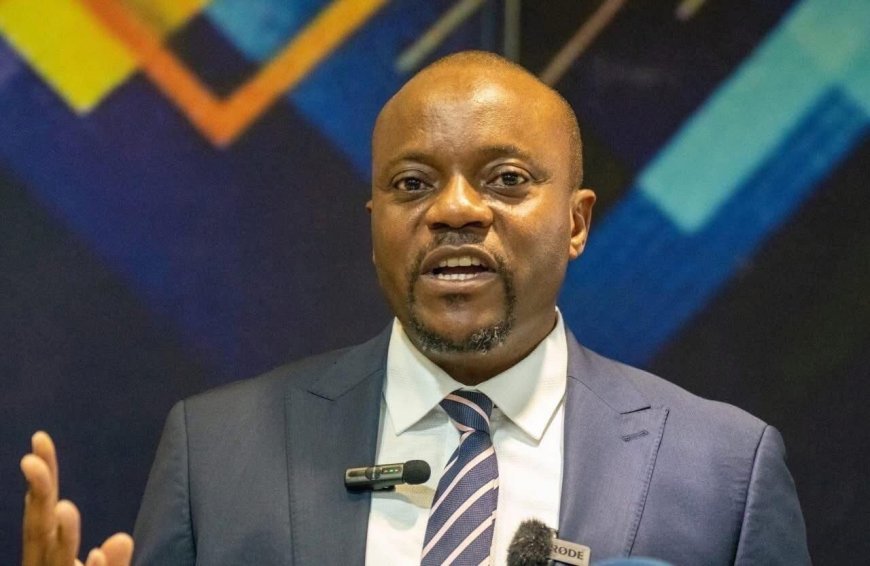
ANTONIO Mwanza has questioned the feasibility of the Government’s target of increasing Zambia’s electricity generation capacity to 10,000 megawatts (MW) by 2031, arguing that the current pace of expansion may not be sufficient to achieve the ambition.
Mr Mwanza the Democratic Progressive Party (DPP) president says Government needed to provide a clear implementation roadmap, secured financing and measurable timelines to demonstrate how the target would be achieved within the remaining five years.
In a statement yesterday, Mr Mwanza said Zambia had added approximately 840MW of installed electricity generation capacity since 2021, raising questions about the scale of expansion required to reach the 2031 target.
He said according to figures released by the Ministry of Energy in October 2026, installed capacity stood at 4,722MW, meaning the country needed to add another 5,278MW within five years.
“To reach 10,000MW in the next five years, they need to be hitting not less than 1,000MW per year. That’s quite a stretch! While expanding electricity generation was important for economic development, Government should ensure that electricity was also affordable, reliable and accessible to households, farmers, entrepreneurs and industries,” Mr Mwanza said.
Mr Mwanza observed that electricity tariffs and ZESCO connection fees had increased since the UPND assumed office in 2021, making access to electricity increasingly expensive for households and businesses.
He argued that the cost of electricity directly affected household expenditure, production costs and the overall cost of doing business.
Mr Mwanza also questioned the consistency of Government’s electricity generation figures, citing differences between the Ministry of Energy’s reported figures and those contained in Energy Regulation Board (ERB) reports.
He said the ERB recorded installed generation capacity of 3,318.43MW in 2021 and 3,885.86MW in 2024, while the Ministry reported 4,722MW in October 2026.
“National energy planning must be based on consistent and verifiable statistics,” he said, calling on Government to publish reconciled capacity figures showing generating plants and their commissioning details.
Mr Mwanza further cautioned that installed electricity generation capacity should not be confused with actual available power, saying factors such as water availability, plant performance, maintenance and fuel supply affected electricity generation.
He cited a February 2026 ministerial statement in which Government reported available domestic generation of 1,635MW, arguing that the difference highlighted the need to focus on dependable electricity supply rather than installed capacity alone.
He also called for clarification of inconsistencies in the installed-capacity figures contained in the ministerial statement.
Mr Mwanza said Government should disclose how much investment was required to achieve the 10,000MW target, the contribution expected from private investors and development-finance institutions, as well as the cost of transmission and distribution infrastructure.
He said the country also needed to strengthen transmission lines, substations and distribution networks to ensure that additional electricity generated could reach consumers.
Citing ZESCO’s 2025 Integrated Report, Mr Mwanza said 53 system disturbances were recorded during the year, with 26 originating within the utility’s network and 27 from interconnected regional systems.
He further noted that ZESCO recorded 575.89 gigawatt-hours in distribution losses during 2025, representing 9.48 percent of electricity purchased and estimated to have cost the utility K1.071 billion.
“The issue is not whether Zambia should aspire to 10,000MW. The issue is whether Government can demonstrate a credible pathway to achieve it by 2031 and ensure that the resulting electricity is reliable, accessible and affordable,” Mr Mwanza said.
He called for the publication of a consolidated 2031 Electricity Delivery Plan, updated quarterly, to account for completed projects, ongoing construction, unfunded projects and those falling behind schedule.