
By BUUMBA CHIMBULU
AT her modest hair salon in Lusaka’s Matero townwship, Martha Lungu starts every morning by switching on hair dryers, clippers and styling equipment before welcoming her first customers.
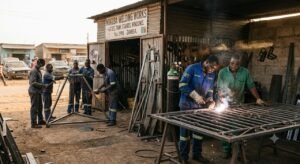
Just a few blocks away, welder Peter Mumba unlocks his workshop and powers up the machines that shape metal into gates, window frames and furniture.
Neither is currently battling prolonged power cuts, but both understand that reliable electricity is the foundation on which their dreams of growing their businesses rest.
For them, a stronger energy system means confidence to invest, expand and employ more people.
Martha hopes to buy additional salon equipment and open a second styling station to reduce waiting times for customers, while Peter wants to purchase modern welding machinery capable of handling larger contracts.
Those ambitions depend on a power supply that can keep pace with increasing demand.
As more Zambians start businesses and industries expand, additional generation capacity will be essential to ensure that entrepreneurs can continue operating without interruption and plan for the future with certainty.
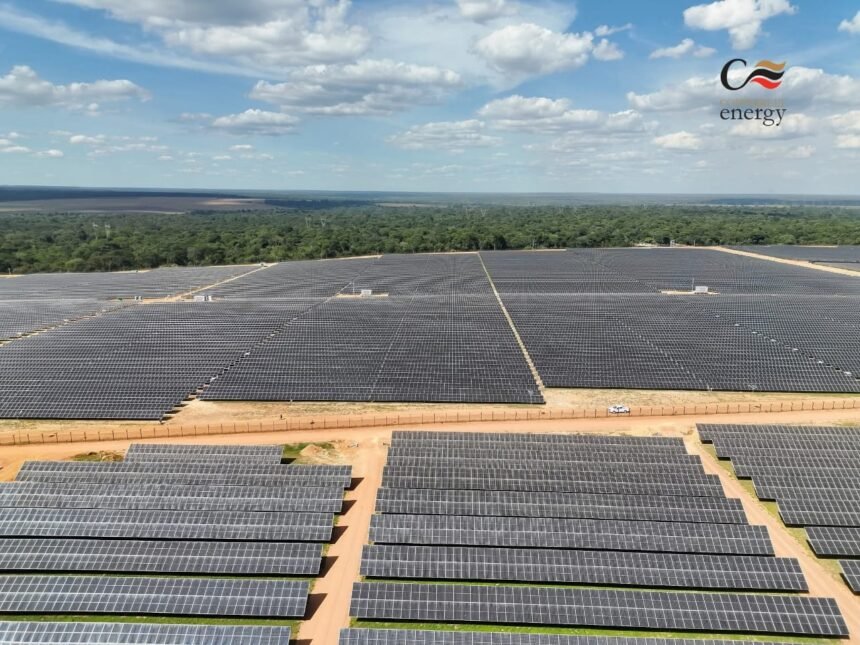
It is against this backdrop that the 136-megawatt solar power plant being developed by Copperbelt Energy Corporation (CEC) in Kitwe takes on added significance.
Built using proceeds from the company’s debut US$200 million green bond, the project will inject more clean energy into the system and support Zambia’s growing electricity needs.
It also marks the beginning of CEC’s broader plan to add about 500 megawatts of solar capacity over the next three years, strengthening the country’s long-term energy security.
On April 30, 2026, President Hakainde Hichilema commissioned the 136-megawatt Itimpi Solar Power Plant in Kitwe, in a move aimed at reducing the country’s dependence on hydroelectricity power.
Speaking during the launch, President Hichilema said the Itimpi II project is a milestone.
“This is a landmark project, your investments are safe, we will not close you but encourage you to grow bigger and better,” he said. He said his government is encouraging energy investments to support Zambia’s ambition of producing three million tonnes of copper annually.
“Reaching three million tonnes will consume not less than 8,000 MW of power, so if you factor in other energy needs you find that we need to generate more power beyond 8,000 MW,” President Hichilema said.
Across Zambia’s southern region, towering solar panels now stretch across vast pieces of land, heavy machinery works tirelessly at construction sites, and engineers work around the clock to complete projects that could redefine the country’s energy future.
From Monze to Choma and beyond, Zambia is witnessing what many industry players describe as an unprecedented transformation of its energy sector.
Driven by government policy, private sector participation and strategic investments by Zesco, the country is rapidly diversifying its energy mix in a bid to achieve energy security, support economic growth and reduce its dependence on hydroelectric power.
Reliable electricity remains one of the most critical requirements for industrial growth, mining expansion, manufacturing, agriculture and the development of small and medium-sized enterprises.
Without adequate power supply, economic growth can be severely constrained.
The then Mines and Minerals Development Minister Paul Kabuswe described the commissioning of the Itimpi Solar Plant and other similar projects across the country as a fulfillment of the government’s promise to the people.
Mr Kabuswe said the government has remained committed to reducing dependence on hydro power and is delivering on its pledge through increased investment in solar energy infrastructure.
He added that the 136 megawatts generated from the Itimpi plant will significantly contribute to addressing the country’s power challenges.
Such projects provide opportunities much-needed income for families while helping develop technical skills among Zambian workers.
The economic benefits extend beyond direct employment.
Local businesses supplying construction materials, transport services, accommodation and food are also benefiting from the increased activity surrounding the projects.
For many communities, the arrival of major energy investments represents not only improved electricity access but also broader economic opportunities.
Speaking when President Hichilema launched the Itimpi II project, CEC Chief Executive Officer, Owen Silavwe said Zambia and the Southern African region have faced energy supply challenges due to overdependence on a single source of power.
Mr Silavwe explained that the Itimpi Solar Plant will help bridge the energy deficit and improve power supply.
He added that the project has created over 2,500 jobs during construction and about 100 permanent jobs.
CEC Board Chairperson London Mwafulilwa said Zambia has demonstrated its capacity to develop world-class infrastructure and is positioning itself as a leader in Africa’s transition to clean energy.
Mr Mwafulilwa noted that the country has made significant progress in the energy sector to ensure sustainable solutions.
He further disclosed that CEC has invested about US$3 million dollars in corporate social responsibility programmes, including the construction of a maternity wing in Garneton.
“Itimpi II is the largest single solar project in the country,” he said.
Zambia produces about 2,900 MW of electricity, with hydro-power contributing up to 83 percent.
Coal accounts for 8.7 percent, while solar contributes 3.2 percent.
The shift toward solar energy is also a strategic response to lessons learned from recent years.
Zambia has traditionally relied heavily on hydropower, with the bulk of its electricity generated from water resources.
However, changing weather patterns and recurring droughts have exposed the risks of depending too heavily on one source of energy.
Reduced water levels at key reservoirs have demonstrated the need for a more diversified energy mix capable of withstanding climate-related shocks.
Solar power offers an opportunity to strengthen that resilience while taking advantage of Zambia’s abundant sunshine.
Across parts of the country, large fields of photovoltaic panels are beginning to reshape the energy landscape.
Construction workers, engineers, electricians and technicians are helping build facilities that will not only supply clean electricity but also create employment and transfer valuable skills to local communities.
The economic impact extends beyond the power plants themselves.
During construction, projects generate demand for transport services, accommodation providers, food suppliers, security companies and building materials.
And Chinese Ambassador to Zambia Han Jing commended President Hichilema for fostering strong bilateral relations with China, which have resulted in mutually beneficial projects such as the Itimpi Solar Plant.
Mr Jing said cooperation between the two countries has already led to the development of several solar plants producing over 800 megawatts of electricity nationwide, adding that the partnership will continue to drive development.
“The Chinese Government will continue to support Chinese enterprises in contributing to Zambia’s goal of reaching 10 gigawatts of total installed capacity by 2030,” Ambassador Jing said.
Analysing the impact of this massive project, it could be concluded that for ordinary people like Martha and Peter, the impact of such investments extends far beyond statistics and engineering milestones.
Stable electricity is not just about keeping the lights on.
For an ordinary Zambian, it can mean a salon owner serving more clients, a welder completing contracts on time, a student passing exams after studying at night, or a family preserving food safely in a refrigerator.
Reliable power underpins economic opportunity, public services and everyday quality of life.
Businesses are more likely to expand or establish operations where electricity is reliable, creating jobs and stimulating local economies.
Frequent outages often force businesses and households to rely on expensive diesel generators or other backup solutions. Stable grid power lowers these costs and allows money to be spent elsewhere.
In short, reliable and expanding electricity means more customers served, larger orders completed on time and greater confidence to hire workers or train apprentices.
It means families supported through steady incomes and communities strengthened by thriving small businesses. The new solar plant is therefore not just about generating power—it is about powering the ambitions of everyday Zambians whose livelihoods depend on keeping the lights on and the machines running.
End//
LIGHTS ON, BUSINESSES ALIVE: THE CEC ITIMPI II SOLAR PROJECT