
2027 Budget aimed to double economy -- Dr Musokotwane
 Nation Reporter
2027 Budget aimed to double economy -- Dr Musokotwane
Content Type: Free
By MUSHIMA MULEMENA
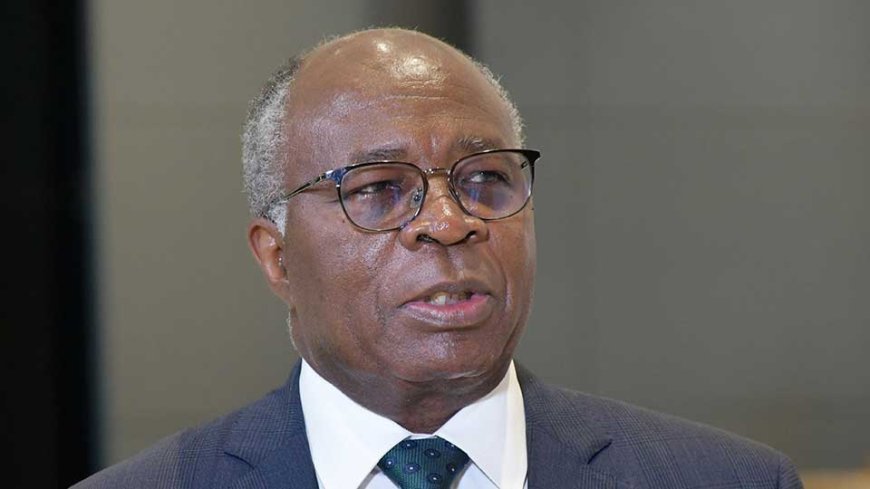
FINANCE Minister Dr Situmbeko Musokotwane says the 2027 National Budget will support government's ambition to double the size of the economy through increased production, productivity, value addition and exports.
Presenting the 2027 in Parliament, Dr Musokotwane says Zambia's the growth agenda prioritises mining, agriculture, manufacturing and tourism as key sectors with the potential to expand economic activity.
Dr Musokotwane says that government is targeting private-sector-led and export-led growth, arguing that increased production must be matched with access to external markets.
Dr Musokotwane has emphasised the need to expand exports of commodities such as copper, maize, soybeans, wheat, sugar and beef to generate foreign exchange and create markets for locally produced goods.
"Government will continue attracting foreign direct investment to partner with local businesses and mobilise resources needed to achieve the country's production targets. Government will empower young people with relevant skills to enable them to participate effectively in economic activities and contribute to national development," Dr Musokotwane.
He said government was committed to creating a conducive business environment, noting that some of the measures will involve policy and legal reforms rather than additional government expenditure.
Dr Musokotwane stresses that other interventions would be supported through taxation and government spending, stating that the combination of these measures is expected to support the Grow Zambia agenda and accelerate economic growth.
And Dr Musokotwane says government is targeting to increase Zambia's electricity generation capacity to 10,000 megawatts by 2031 as part of efforts to support economic growth and expand production.
He said that the installed electricity generation capacity had increased by 42 percent over the last five years, from 3,318 megawatts to 4,722 megawatts, following increased private-sector investment.
"Government intends to accelerate the implementation of the Energy Compact under Mission 300, through measures such as cost-reflective electricity tariffs, the electricity open access regime and diversification of energy sources to reduce dependence on hydropower," he said.
Dr Musokotwane disclosed that more than 1,400 megawatts of additional electricity generation capacity was expected to be added to the national grid in 2027, which he said would significantly increase the country's installed capacity.
He has announced plans to strengthen electricity transmission infrastructure through interconnector projects linking Zambia to Tanzania, Malawi and the Democratic Republic of Congo, alongside domestic transmission lines connecting key parts of the country.
"The regional interconnectors will allow Zambia to import electricity from countries such as Tanzania, Kenya, Uganda and Ethiopia during periods of reduced domestic generation, particularly during droughts.
On petroleum supply, Dr Musokotwane disclosed that government was working with Tanzania to construct a new multi-product petroleum pipeline to increase fuel transportation capacity, reduce reliance on road tankers and help contain fuel supply costs.
Meanwhile, Dr Musokotwane has said government would recruit 3,125 additional frontline medical personnel in 2027 to strengthen healthcare service delivery across the country.
Dr Musokotwane said government would also construct a cancer diseases hospital in Livingstone and several Level One hospitals across the country to expand access to healthcare services.
"Government will undertake the construction of the King Salman bin Abdulaziz Specialized Hospital in Lusaka as part of efforts to strengthen specialised healthcare. We will continue improving the availability of medicines and medical supplies to ensure health facilities are adequately stocked," he said.
Dr Musokotwane has also disclosed that government would undertake reforms to address the accumulation of arrears and strengthen the financial viability, efficiency and effectiveness of the National Health Insurance Management Authority (NHIMA).
"The reforms are intended to improve the sustainability of the health insurance scheme and strengthen its ability to support healthcare delivery. Government will work with health sector experts and other stakeholders to address challenges affecting NHIMA and improve the delivery of healthcare services," Dr Musokotwane said.